
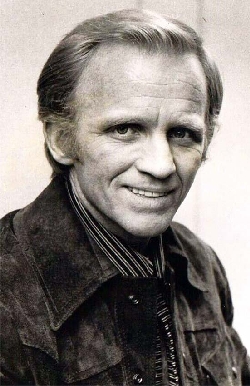
Such a sorry individual is not the Gary Crosby I met nor the kind and generous man described by those who loved him. By his own admission, that man did exist, but only in the past. On his deathbed, Crosby, an avid sports fan, reflected upon the recent death of baseball great Mickey Mantle, who, like Crosby, battled alcoholism. Crosby said he would like to be remembered as Mantle wanted to be remembered, as a good guy, according to his manager, Paul Volpe.
In early May, I got a phone call from Paul Volpe, who was working with Crosby and was to officially become Crosby's publicist manager just a week before the singer's death. Volpe said that Crosby was signed to headline Sacramento's annual Jazz Jubilee with the Pied Pipers singing group. Crosby and the group were fresh from a three-month tour with the Guy Lombardo Orchestra and Crosby was sounding really good, he said. He went on to say that Crosby had not performed professionally for several years but 'was now back on track after the successful tour.
He told me a little about Crosby's life, and since I had always been interested in the Crosby mystique, frankly I was curious. I had not been a particularly big Bing fan, but Gary, who was closer to my own age, interested me. I remembered some of the romantic comedy films in which he appeared, usually playing the lead actor's brash sidekick. I caught a lot of his appearances on television variety shows and his summer fill-ins on his dad's show. I saw him play regular parts in several series and sing on variety shows. And I had always wondered about the stories of his wild ways.
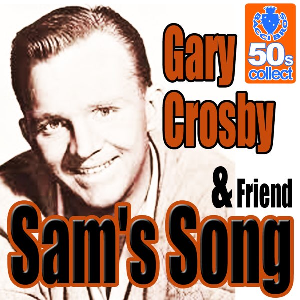
I recalled "Sam's Song" and "Play a Simple Melody," the first double-sided gold record in recording history, recorded by Bing and Gary in 1950. Gary was barely 18 [sic]. As Volpe and I talked, our mutual interest in Crosby was apparent and Volpe set up a phone interview with the singer. Crosby and I talked for about 15 minutes. At first we spoke of his current plans, which he saw as a comeback of sorts, but as we talked, he loosened up, becoming disarmingly honest, telling me about the years of hiding in alcohol and substance abuse. He called himself "a wildman." He said that getting into a 12-step program had saved his life and that he had found a way to give something back by working to help others in alcohol, drug and child abuse programs. He felt that he was doing what God planned for him to do. I later found out about the many thankful people he had helped overcome their addictions. But as for a show business career, he said he had all but given up on singing until the Guy Lombardo tour. Before hanging up, Crosby and I agreed to meet when the group arrived for the Jazz Jubilee.
Over lunch during the Jubilee, I listened as Crosby answered my questions. At first he appeared a little ill at ease, but after Volpe left on an errand, our conversation became more intimate and he seemed to relax. His voice was a little raspy and I asked him if he had a cold. "No," he answered, "I've had bronchitis for about six weeks and I just can't shake it." He said he was on medication but it was not giving him much relief. Although he was not thin, I thought he looked somewhat frail. He told me how his book had hurt him. "I could always tell if someone had really read the book," he said. "The ones who called it a 'Daddy Dearest' couldn't have read it."
Later, I read the book myself, and I have to agree with him. But I never got to tell him that. It is true that in the book he does talk about the difficulties he had with his father and how he used that as an excuse to be a hellraiser, however, he also tells about how he came to realize that his anger and hatred against Bing was causing not only himself, but everyone else, grief. And he knew he was destroying himself. By the end of the book, he tells of coming to terms with his father and forgiving him. He said he realized that Bing, in trying to make his sons strong, raised them the only way he knew how.
As our interview continued and he began to talk about his alcoholism, I told him of my own painful experience with some alcoholic family members and the help I got from a 12-step group. He began to really open up then, speaking warmly and comfortingly. Then he pulled out his checkbook and tore off the address and phone number portion of a bank deposit slip and handed it to me. "If you need someone to talk to, call me anytime," he said. But, not wanting to disturb his privacy, I never called.
He told me of how he met his fiancee, Bobbi Boyle, who is a member of the Pied Pipers, and how she and the group had helped him find his true voice, a voice Boyle describes as "a beautiful, high-floating baritone." He told me how much he cared for his son Steve, and he spoke of high hopes for his relationship with his new publicist-manager. Later in the evening, during Crosby's performance, I was blown away by his great voice and stage presence. He didn't sound like his dad. He had his own soulful and laid-back bluesy style, and it was moving, much better than he gave himself credit for.
After the show, Crosby, Boyle and Volpe met members of my family who were at the jubilee, and before we parted, we talked about seeing each other again in Laughlin, Nev., at Christmastime. None of us knew that my newspaper interview with him would be his last. In December 1993, when he got a call asking if he would like to do the three-month Lombardo tour, he wasn't very enthusiastic. He felt he could not perform their kind of music, but he signed on anyway. Bobbi Boyle and the Pied Pipers began to help him. It was difficult at first, Boyle, a Juilliard-trained musician, said. "He was not a trained singer and he had trouble with arrangements. I wondered why his voice was hoarse." Furthermore, she said, "He was a tough guy, always ready to put up his fists, very defensive." However, she learned to deal with him truthfully and not to pull her punches. "I told him 'Stop it!'" she said. Boyle continued to work with him, teaching him vocal exercises that helped him smooth out the rough spots in his voice. He was a good student, she says. Throughout the tour, he got better and better. He worked really hard improving himself." Boyle said.
Soon Crosby and Boyle were performing in local night spots with a small jazz group and were part of the "Jazz Without Booze" concerts at the Betty Ford Treatment Center early this year. "He didn't know how good he was. They (the audience) love you,'" she told Crosby. She says he became more confident and happy. He began to realize he had a real support group in his management, the other musicians and herself. He had a family, he had a job. Eventually their relationship deepened. "I began to see the sweet soul underneath all that roughness. I've never known a more spiritual man," Boyle said.
Volpe, who had become close to Crosby, worked at getting more gigs for him and on June 7 he performed what would be his last show at the Luminario, a night club dinner house in Los Angeles. The show was recorded, and Volpe played portions of it over the phone for me. He sounded good. Crosby never got to finish the "White Christmas" album that was in the works. He had secured the master recordings of his father singing the famous yule song of the same name and planned to produce a duet like the famous Nat and Natalie Cole made of "Unforgettable."
Crosby was signed to do a Christmas show Nov. 30 to Dec. 15 at the Riverside Hotel in Laughlin and planned to release the album then. He and Volpe had invited my husband and me to join them there. Others began to offer Crosby support and help. Writer-producer Sheila Cornelius was talking to him about being in a television series she was developing, "The Hollywood Athletic Club." She talked of a movie. Singer Lou Rawls agreed to do a song with Crosby. There was even a second book being planned, tentatively titled "One for the Road."
His future looked sunny, except for the nagging bronchitis he could not shake. Just prior to the Lunaria engagement, Crosby sought further medical advice at Los Angeles' University of California Medical Center. Ultimately, he was diagnosed with inoperable lung cancer. Further tests and procedures revealed that the cancer had spread, and he was given radiation treatments for a few weeks, but excruciating pain and side-effects caused his doctors to hospitalize him again, this time at St. Joseph's. Volpe, who had stayed in touch with me since the Jazz Jubilee, called me at work one morning about two weeks before Crosby's death and asked me to phone him. He said it was bad news.
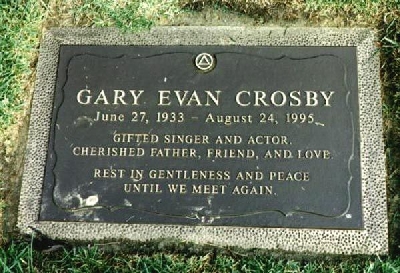
I guess the phone number got buried on my desk and by evening I had forgotten. Life was busy. Volpe's call slid into the background of my memory until 7:20 p.m. Aug. 24, when my home phone rang. "Joanne, it's Paul. Are you sitting down? Gary's dead."
They buried him at Forest Lawn. He was dressed in jeans, a T-shirt emblazoned with the logo of his beloved San Francisco 49ers, and he was wearing his 12-step earring. More than 400 of his friends were there, including singer Rosemary Clooney and her son (Crosby's godson) actor Miguel Ferrer, actors Jack Haley Jr. and Harry Morgan, Dolores Hope (Bob's wife), former sportscaster Gil Stratton, and a large gathering of Crosby family members, including his son Steve and halfsister, Mary, just to name a few. Many of his 12-step friends were there to pay tribute to the man who had helped and inspired them. I was invited and agonized over going, but finally work and other obligations decided for me. I talked by phone with Volpe, Boyle and Steve Crosby, all of whom were pretty shaken. We all kept asking the same question, "Why? Just when things were so good."